| Event type: | Meeting |
| Date: | 16th May 2024 |
| Venue: | Kenilworth Methodist Church |
| Organiser: | |
| Cost: | Entry is free to members (non-members welcome for a £1 donation) |
Speaker: Graham Sutherland
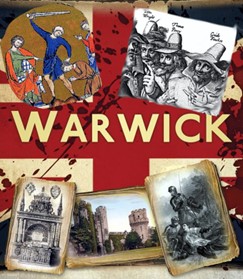
Graham Sutherland, author of Warwick - Bloody British History sheds light on some of the less savoury aspects of the town’s history. Hundreds of dark and scandalous events have happened in Warwick over the centuries, from the murder of Piers Gaveston, the king's lover to the incredible histories of the Earls of Warwick. The Gunpowder Plot started here and the castle's horses stolen when the plotters tried to escape. Come and hear about martyrs, murderers and corrupt officials, crimes, ghosts, prize-fighters and eccentrics, you'll never see the town in the same way again!
Graham is a member of the Ancient and Honourable Guild of Town Criers: the Loyal Company of Town Criers: Guild of Registered Tourist Guides: Institute of Registered Tourist Guiding: Heart of England Tourist Guides Association: Society of Authors. Being a retired police inspector who has lived most of his life in the Midlands, it is an area he knows well. Until 31 December 2014 he was Warwick`s Town Crier so he does not have a problem being heard! He is also a member of the Inn Signs Society and hold the position of Official Ale Taster to Warwick Court Leet. In addition to being a tourist guide, Graham is much in demand as a speaker on a considerable number of local topics. Writing is another of his interests, both fiction and non-fiction, several of which complement his talks. Being passionately fond of the Heart of England Region, Graham enjoys sharing his knowledge of this area and its many colourful, and sometimes infamous characters.
A Review of "The Darker Side of Warwick
Graham Sutherland gave us a very interesting history lesson on the town and past inhabitants of Warwick from the early days of the settlement to the 18th century. Part 2 of his talk would bring us to the 21st century. He described some of the more intriguing moments and the characters that helped shape the town’s development.
The first record of Warwick was in AD 751 when the settlement was ransacked by the feared Danes, this was followed by similar attacks by Picts, Saxons and other barbarians. This onslaught continued until AD 871 when Alfred the Great became King of Wessex and his military tactics of constructing a series of fortifications across the region helped limit the attacks and also developed new villages, one of which was Warwick in AD 914.
In 1066 England was invaded by William the Conqueror and subsequently his representative took up home in the then small Warwick castle. Henry de Newburgh became the first Earl of Warwick in 1088 gaining his title by his loyalty to the new King William II during a rebellion by the English barons.

Warwick Castle and the Earl were treated with respect and fear. Miscreants were swiftly tried and judged without jury. Possible ‘witches’ were bound and thrown into ponds, if they floated, they were guilty, if they sank they were innocent. Undoubtedly a catch 22 situation!! The severity of other punishments depended on the ability to bribe the torturers!!
Richard Beauchamp was the 13th Earl of Warwick, a very capable soldier and a good friend to Henry V. In 1429 the English faced a new and formidable enemy in the unlikely form of a seventeen-year-old French girl known as Joan of Arc who persuaded King Charles VII of France to give her command of the French army. This led to a massive uplift in the French fortunes leading her troops from one victory to the next. The English were on the run until Richard Beauchamp travelled to France with a large army and during one battle managed to capture Joan. She was tried and sentenced to life imprisonment in 1431. However four days later she was found wearing men’s clothing which had been left in her cell after her own clothes were removed. Cross dressing was a capital offence in those days, she was therefore found guilty of heresy and sentenced to death by burning at the stake, reportedly recommended by the Earl of Warwick.
Robert Dudley, Ist Earl of Leicester (sometimes spelt Leycester) was a great friend of Elizabeth 1. He came to Warwick in 1571 and was instrumental in arranging the funding for The Lord Leycester ‘Hospital’ which would provide accommodation for twelve Veteran soldiers, so not a hospital as such. Strict rules governed the way the residents behaved including: - adultery and drunkenness was banned, brothel visiting and gaming was not allowed, no nights out without permission, no female servants under the age of sixty and marriage only allowed by special permission – so not much fun!. The ‘hospital’ is still being run in Warwick today, perhaps with more lenient rules!


The Gunpowder Plot had many Warwickshire connections. It’s figurehead Robert Catesby was born near Warwick and he used Guy Fawkes’ expertise of gunpowder in the plot to try and blow up parliament which ultimately failed. Horses were stolen from Warwick castle during their escape. After fleeing during a heavy rainstorm, they decided to light a fire to dry out their remaining gunpowder – yes, you can guess what happened next!
Graham also relayed the tale of the civil war around 1642 focussing in the midlands especially the battle at Edgehill. He also told the story of the raging fire that engulfed Warwick in 1694.
Graham’ talk described a very interesting period in Warwick’s history, many facts unknown to the audience. A very absorbing talk, much appreciated by a large audience.